
Ecotech Consulting: Why Environmental Services for Business Are Becoming a Necessity


Introduction
Over the past few years, I have increasingly observed that the familiar scheme of "submit the report and forget about it until next year" is no longer working. Environmental standards are tightening, regulatory authorities are demanding real-time data rather than paper certificates, and competitors are starting to use the environmental agenda as a market advantage. Under these conditions, ecotech consulting is no longer a niche service for a select few but is becoming a tool that directly affects the stability and economics of an enterprise.
I have been working in this field for almost twenty years, and before my eyes, the attitude toward the environment has traveled a path from an irritated "oh, those environmentalists are here again" to a conscious "we simply won't be able to operate without this." In this article, I want to talk about what modern ecotech consulting consists of and why its demand will only continue to grow.
What Ecotech Consulting Means in My Understanding
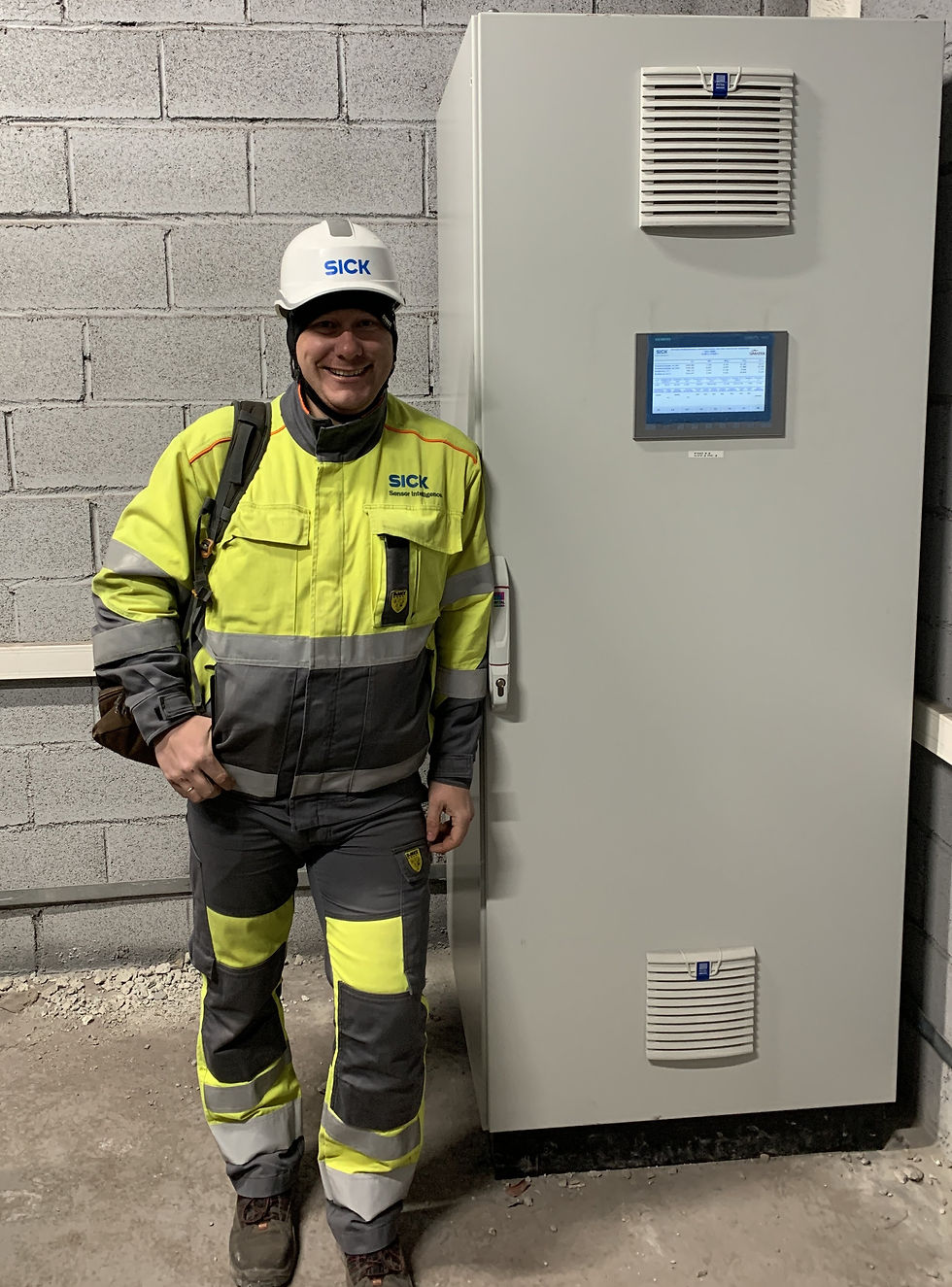
For me, ecotech consulting is not about selling boxes of equipment or giving abstract advice. It is engineering work that begins with a site visit and ends with the launch of a system capable of providing reliable data to regulatory authorities without failures. Between these two points lies an entire layer of tasks: auditing, design, equipment selection, installation, commissioning, personnel training, and service support.
My approach is simple: first, we thoroughly investigate what is actually happening at the facility, what tasks the production faces, and what regulatory requirements are imposed on it. Only after that do we propose a solution — not the most expensive or fashionable one, but one that will genuinely work under the specific conditions.
Key Areas We Work In
Over the years of practice, several areas have emerged that now form the foundation of ecotech consulting.
Environmental Audit and Risk Assessment
Every project begins with diagnostics. We visit the site, conduct instrumental measurements, analyze the existing monitoring system, and check how well it complies with current standards. At this stage, it often turns out that the actual concentrations of pollutants differ from those stated in the reports, and the sampling points are chosen in such a way that the data is distorted. Such an audit provides not just a list of problems but a roadmap — what to change and in what order.
Implementation of Automated Monitoring Systems
Modern environmental control means real-time data, not one-off measurements. We design and launch systems that include gas analyzers, dust monitors, flow meters, sample conditioning systems, and data transmission to state registers. Importantly, all of this is selected not from a catalog but according to the real parameters of the gas stream — temperature, humidity, dust load, and chemical composition.
Optimization of Production Processes
Monitoring data is not just for reporting. By analyzing it, you can find points of loss: excessive fuel consumption, inefficient equipment operating modes, and hidden leaks. One of my clients, after implementing an emission monitoring system, discovered that at one section, gas consumption was 12% above the design level due to incorrect burner settings. Fixing the problem paid back the cost of the entire system in four months.
Personnel Training and Development of Internal Standards
Equipment does not work without people. Therefore, training the customer's employees is a mandatory stage. We train operators to perform daily routine maintenance and engineers to interpret data and interact with regulatory authorities. We also help develop internal regulations so that the monitoring system does not depend on a single person who might go on vacation or quit.
Document Preparation and Interaction with Regulatory Authorities
Environmental legislation in Russia and the countries of Central Asia is changing rapidly, and keeping track of these changes independently is a separate job. We help prepare documents for obtaining comprehensive environmental permits and industrial environmental control programs, as well as advise on matters of interaction with inspectors.
Several Case Studies from Practice
To avoid being unsubstantiated, let me give three real cases that well illustrate how ecotech consulting works in practice.
Metallurgical Plant. The enterprise faced chronic exceedance of dust limits at the boundary of the sanitary protection zone. Scattered sensors made it impossible to identify the source. We installed automatic dust monitors at the main points, connected them into a network, and synchronized them with meteorological data. This made it possible not only to find the culprit source (an incorrectly functioning filter) but also to generally revise the ventilation modes, reducing energy consumption by 12%.
Mining Company. The main problem was dust emissions during ore transportation and crushing. After an audit, we proposed installing irrigation systems at transfer points and modernizing aspiration units. In parallel, we trained personnel to monitor dust levels using portable instruments. The air quality in the work area improved to such an extent that the enterprise received a positive conclusion from local environmental authorities, which they had been unable to obtain for several years.
Oil and Gas Sector. At one facility, the task was to set up continuous emission monitoring on a flare stack. The peculiarity was that the gas composition changed significantly depending on the operating mode. We selected an analyzer capable of operating over a wide dynamic range and designed a sampling path with condensate protection. The system successfully passed certification and has been operating without major failures for several years.
Why This Is Important Right Now
Legislation in the region is not standing still. In Russia, the implementation of automatic monitoring systems for Category I facilities is already an obligation, not an option. In Kazakhstan, enterprises are required to transmit data to the National Environmental Monitoring Center online. In Uzbekistan, requirements for the environmental labeling of transport are being introduced, and standards for industrial zones are being tightened. Fines for non-compliance are growing, and compensatory payments can increase severalfold.
Under these conditions, attempts to save on ecology result in losses that are many times greater than the cost of properly implementing a monitoring system. Conversely, enterprises that invest in ecotech consulting today find themselves ahead in a couple of years — both financially and reputationally.
Conclusion
The environmental agenda is no longer something external and imposed. Today, it is part of the production reality that must be dealt with systematically. Ecotech consulting is not a magic pill but methodical engineering work that allows an enterprise to develop calmly, without fear of sudden fines and shutdowns.
If you feel that the environmental topic is starting to "stall" at your production facility, or you are only planning to build a monitoring system from scratch — let's discuss it. I will help you figure out what you specifically need and bring the project to a working outcome.


Comments