
Ecotech Consulting: How Environmental Services for Business Help Industry


Introduction
Over the years of working with industrial enterprises, I have clearly seen how attitudes towards the environment are changing. Ten to fifteen years ago, I was approached mainly when a fine had "landed" or when an urgent need arose to close an inspector's order. Today, the conversation more often starts differently: managers want not just to avoid sanctions but to build systematic work with environmental data, making production more efficient and transparent. It is at this moment that ecotech consulting enters the stage — not as an abstract service but as a practical tool that links technological processes, measuring equipment, and regulatory requirements into a single working system.
What Ecotech Consulting Means in My Understanding
For me, ecotech consulting is not about writing reports or one-off consultations. It is comprehensive support for an enterprise at all stages: from the initial audit to the launch of an automated monitoring system and its integration with state registers. In essence, this is engineering work that requires an understanding of the chemistry of gas flows, metrology, and the specifics of local legislation.
When a plant approaches me with the question "we want to get our emissions in order," I do not sell a ready-made set of equipment. I start by visiting the site, looking at the real conditions: what is working and how, where the sampling points are, what the gas composition is, what temperatures and dust loads exist. Only after that can we talk about what exactly needs to be done.
The Main Areas We Work In
Over nineteen years of practice, several key areas have emerged that I now unite under the concept of ecotech consulting:
Environmental Audit and Risk Assessment
The first step is to understand the current situation. We conduct an instrumental survey of emission sources, check the operation of existing monitoring and gas cleaning systems, and compare actual indicators with regulatory requirements. Even at this stage, inconsistencies are often revealed that have gone unnoticed for years because no one has looked at them systematically.
Design and Equipment Selection
After the audit, it becomes clear what needs to be changed. We do not offer "the most expensive" or "the cheapest" solution — we select equipment that is optimal for the specific conditions. Gas analyzers, dust monitors, flow meters, and sample conditioning systems — all of this must be compatible and designed for the real parameters of the gas stream, not for averaged figures from a questionnaire.
Implementation and Commissioning
I have already recounted many times how incorrect installation or an erroneous choice of location has nullified an entire project. Therefore, we control the implementation stage personally or through trusted partners. Commissioning, calibration, and setting up data transmission — all of this is done under our technical supervision.
Personnel Training and Service Support
A monitoring system will not work if the people who maintain it do not understand what they are doing and why. Therefore, training the customer's personnel is a mandatory part of our work. And beyond that — regular service maintenance, which helps prevent the degradation of equipment rather than dealing with the consequences two years later.
A Case Study from Practice
One illustrative case that well demonstrates why ecotech consulting is needed occurred at a large metallurgical plant. The enterprise had invested significant funds in an automatic emission control system, but after six months of operation, the data began to "drift," and the optical elements became coated with a film. We were invited to investigate.
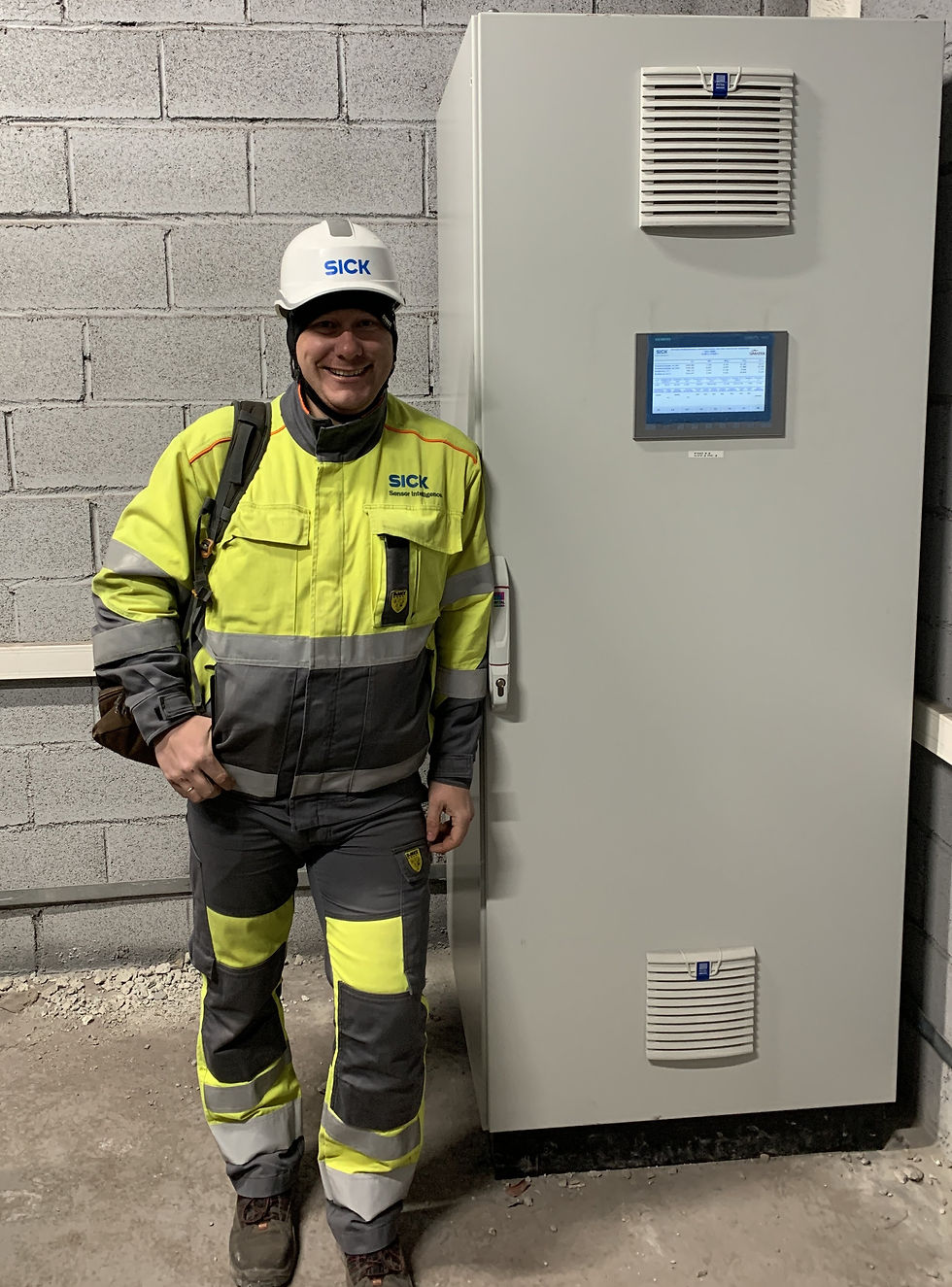
Upon arriving on site, we discovered that the system had been selected without taking into account the actual dust load and humidity. In addition, the analytical cabinets were located in a workshop where temperatures rose to +45 °C, and maintenance was impossible without issuing work permits. We redesigned the sampling path, relocated the cabinets to a clean room, and reconfigured the system. After that, the equipment operated without failures for several years, and the enterprise stopped receiving injunctions.
This example confirms a simple rule: competent ecotech consulting saves not only money but also nerves.
Why This Is Important Right Now
Legislation in Russia and the countries of Central Asia is tightening. In Kazakhstan, enterprises are obliged to install automated emission monitoring systems and transmit data in real time. In Uzbekistan, requirements for the environmental labeling of transport are being introduced from 2026, and standards for industrial zones are being tightened. In Russia, the transition to best available techniques (BAT) continues, and the state accounting system for negative environmental impact objects is becoming increasingly transparent.
Under these conditions, relying on chance and one-off measurements no longer works. Ecotech consulting is becoming not a whim but a necessity for any enterprise that wants to operate stably and without conflicts with supervisory authorities.
What You Get in the End
To summarize briefly, competent ecotech consulting gives an enterprise three main results:
Reduced risk of fines and sanctions. The monitoring system operates correctly, data is reliable, and reporting is generated on time and in the correct format.
Increased efficiency. Emissions data is not only for reporting but also a source for optimizing the consumption of fuel, raw materials, and energy.
Peace of mind for management. You know that your equipment is being serviced by professionals, and the environmental department is not living in a state of constant stress.
Conclusion
Ecology is no longer a topic for "checking a box." Today, it is as important an aspect of management as finance or industrial safety. And just as with finances or safety, investments in ecology must be made thoughtfully — with an understanding of goals, risks, and expected results.
If you feel that the environmental monitoring system at your enterprise is not working as it should, or if you are only planning its implementation — let's discuss it. I will help you figure out what you specifically need and bring the project to a genuinely working outcome.


Comments