
How the Wrong Equipment Choice Destroyed an Environmental Monitoring System at One of the World's Largest Metallurgical Plants in Just Three Months


I want to share with you perhaps one of the most striking and, at the same time, disheartening examples from my practice — a vivid illustration of how mistakes made at the design stage can, in a matter of months, turn expensive, high-tech environmental monitoring equipment into a pile of useless metal and optics.
Operating Conditions: When Theory Diverges from Practice
The events unfold at one of the largest metallurgical plants in the world. A modern emission control system was scheduled for installation in the flue gas desulfurization (FGD) workshops, intended to ensure regulatory compliance and stable collection of environmental data. The desulfurization system itself was implemented using the wet method: flue gases, saturated with sulfur dioxide and dust, pass through hollow scrubbers where lime milk — an aqueous suspension of slaked lime — is injected. By creating a large contact surface area between the fine droplets of the suspension and the gas stream, SO₂ is chemically bound into calcium sulfites and sulfates. Theoretically, this technology can achieve SO₂ removal efficiencies of up to 99%.
In practice, however, the scrubbers performed far from ideally. The workshop equipment — a legacy of the Soviet era — operated with the inevitable carryover of droplet moisture, particles of unreacted lime, and abrasive dust characteristic of its age. As a result, an extremely aggressive environment formed in the flue gas duct after the scrubber: high moisture content (close to saturation point), high concentration of solid particles (lime dust and fly ash), and the presence of chemically active calcium and sulfur compounds.
Added to this were severe climatic conditions: the stack on which the equipment was mounted was located in a region with temperature fluctuations ranging from –40 °C in winter to +40 °C in summer. And critically, the stack itself was made of fiberglass — a material that, unlike steel, possesses different physical properties, a factor apparently overlooked during the measurement solution selection phase.
What Was Installed: In-Situ Cross-Duct Analyzers
Driven by a desire to save on capital expenditures and simplify installation (in-situ systems are indeed cheaper to purchase and do not require heated sample lines), in-situ cross-duct equipment was chosen for emission monitoring. Three sets of instruments were mounted on the flue gas duct, each comprising:
NDIR analyzer (Non-Dispersive Infrared) for measuring CO, SO₂, NO;
UV analyzer (Ultraviolet) for selective measurement of SO₂ and NO₂;
Wet dust monitor for controlling particulate matter concentration;
Ultrasonic flow meter with transducer purging and drying.
The gas analysis instruments and the flow meter were installed in a double-pass configuration: on one side of the duct — a transceiver, on the opposite side — a retroreflector (or, in the case of the flow meter, a second transceiver). The optical beam passes through the gas stream twice — forward and back. No sample conditioning, no filters, no heated lines. It seemed like an elegant and simple solution.
Chronicle of a Catastrophe: Three Months to Complete Failure
No more than three months passed from the moment of startup, and all three sets of equipment had completely failed. Let's break down the reasons for this fiasco point by point.
Reason No. 1: Emitters Operating at Their Limit
As soon as the system was started, the gas analyzer electronics encountered the first, fatal problem: severe attenuation of the optical signal. Due to the high concentration of dust, moisture droplets, and lime particles in the duct, the intensity of the beam passing through the medium dropped so drastically that the automatic gain control (AGC) systems were forced to immediately push the emitters to their maximum power limits. The instruments were essentially operating in a near-emergency mode — at maximum gain — just to barely "punch through" the turbid flow. Prolonged operation in such a regime inevitably leads to accelerated degradation of radiation sources (lamps, laser diodes) and overheating of drivers.
Reason No. 2: Lime "Coating" and Chemical Corrosion
The optical windows of the transceiver and reflector very quickly became coated with a dense layer of lime and dust buildup. Even the built-in, enhanced purge systems supplying compressed air to the optical windows proved powerless — under the constant "shower" of lime milk droplets and the adhesion of wet dust, the purge simply could not keep up. The buildup grew, the signal weakened further, exacerbating problem No. 1.
Moreover, the lime combined with water created an aggressive, high-pH (alkaline) environment, which over time began to corrode the anti-reflective coatings on the optical elements, the metal parts of the housings, fasteners, and seals. Manufacturers of optical analyzers typically recommend regular window cleaning and, in harsh conditions, the use of protective gas curtains or filter walls. In this case, however, none of these measures proved sufficient — the conditions were simply too severe.
Reason No. 3: Alignment on a "Breathing" Fiberglass Stack
Fiberglass is a material subject to significant thermal deformation and possesses different rigidity compared to steel. Its coefficient of linear thermal expansion is considerably higher than that of metals, and under cyclic loading (pressure fluctuations, vibrations, temperature swings), fatigue damage accumulates over time. Simply put, the stack "breathes": its geometry changes depending on the ambient temperature, the temperature of the flue gases inside, and even wind load.
For a cross-duct analyzer, alignment — maintaining strict coaxiality between the transceiver and the reflector — is critically important. The slightest misalignment (by a fraction of a degree) causes the reflected beam to miss the detector. In the conditions of a "breathing" fiberglass stack, maintaining stable alignment proved physically impossible. The instruments required constant readjustment, and after each significant temperature swing, the connection between the units was completely lost.
Reason No. 4: The Flow Meter "Eaten" by Lime
The unfortunate installation of the ultrasonic flow meter, intended for measuring the volumetric flow rate of the exhaust gases, completed the picture. The ultrasonic sensors, mounted on the duct, instantly became covered with a layer of wet dust and lime. Fouling of the transducer faces is one of the most common causes of failure or incorrect operation of ultrasonic flow meters, especially in media with high concentrations of solids and scale. As a result, the signal weakened to such an extent that the flow meters stopped providing reliable data and soon failed completely — the aggressive environment corroded both the sensors themselves and their mountings.
Reason No. 5: Maintenance at a Height of 30–60 Meters
The measurement points were located at heights ranging from 30 to 60 meters. Of the three stacks on which the instruments were mounted, two were equipped with vertical ladders, and only one had a stairway. The plant certainly had personnel authorized for work at height, but the number of such specialists was limited, and they had to be diverted from other tasks. Each ascent to such a height via a vertical ladder, carrying a toolbox and wearing personal protective equipment, in windy and low-temperature conditions, turned into a complex and lengthy procedure requiring work permits and approvals.
Any routine maintenance — cleaning optics, adjusting alignment, checking functionality — was inevitably delayed due to organizational difficulties and the limited availability of qualified personnel. And each such delay only accelerated the degradation of the instruments, which demanded constant attention.
What Should Have Been Done: The Correct Solution
The designers' main mistake was approaching equipment selection without a thorough survey of the operating conditions. In-situ cross-duct analyzers are an excellent solution for relatively clean and stable gas streams (e.g., after high-efficiency baghouse filters, at gas-fired boiler houses). They are indeed cheaper to install and require no complex sample conditioning. However, for wet FGD conditions with high moisture, dust, and chemically aggressive components, they are categorically contraindicated. Furthermore, experts note that in-situ systems are fundamentally unsuitable for ducts with high dust loads.
The only correct solution for this facility would have been the installation of an extractive system based on the "hot-wet" method (hot-wet extractive CEMS). How does it work?
A heated sampling probe with a coarse filter is installed directly into the duct. The probe extracts a gas sample.
The entire sample line, fine filters, and analyzer measurement cell are maintained at a constant temperature above the dew point (typically 180–200 °C).
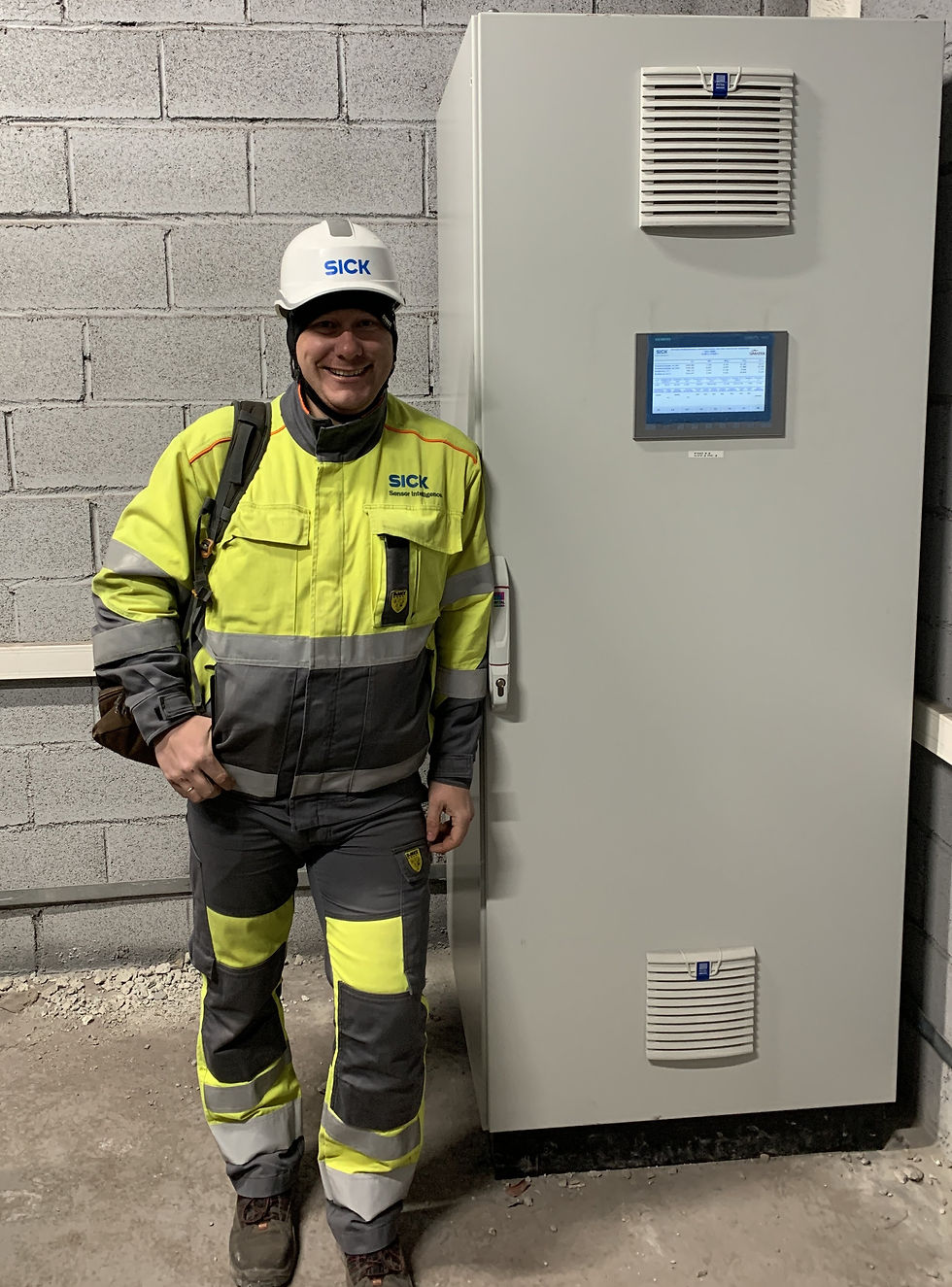
Sample analysis takes place in a conditioned environment inside a cabinet housing the gas analyzer.
This architecture completely eliminates condensate formation in the sample path (water does not drop out, SO₂ and other components do not dissolve or get lost along the way), protects expensive optics and detectors from direct contact with the aggressive environment, and allows analyzer maintenance to be performed in comfortable conditions — at ground level or on an accessible platform, rather than at a height of 60 meters.
Yes, an extractive system is more expensive to install (requiring probe mounting, heated line installation, and a conditioned cabinet setup), but its operational costs and total cost of ownership under harsh conditions are several times lower due to significantly higher reliability and reduced maintenance requirements.
Conclusions
This case is a classic example of how an attempt to save on initial investment results in the complete loss of invested funds and disruption of environmental reporting. The equipment, which operated for only three months before failing, brought the plant nothing but headaches and losses. With proper selection, it could have served reliably for many years with appropriate care.
Key lessons from this story:
Never select equipment without a complete survey of operating conditions. Gas composition, temperature, humidity, dust load, duct material, climatic conditions, and accessibility for maintenance — all of this must be considered during the design and selection phase.
In-situ cross-duct analyzers are not intended for "dirty" and "wet" ducts. In conditions of wet FGD, cement production, and coal or fuel oil combustion — only extractive systems are suitable.
The "hot-wet" method is the gold standard for aggressive environments. It guarantees sample integrity, protects analytical equipment, and ensures measurement reliability.
Ultrasonic flow meters in high-dust and scaling environments are a risky choice. In such conditions, differential pressure devices on averaging pitot tubes (such as Annubar) with purged impulse lines are a better alternative.
Accessibility for maintenance is not a secondary but a critical factor. If cleaning optics or replacing a sensor requires complex work at height and personnel with the appropriate certification are limited, the service life of the equipment will be measured not in years, but in months.
I hope this practical example helps you avoid similar mistakes when building environmental monitoring systems. If you have any questions or would like to discuss a specific project, feel free to reach out — we will figure it out together.


Comments