
How "Hot" Extraction Turned into a Pumpkin: Lessons on Placing Analytical Equipment, or Why Environmental Monitoring Equipment Failed to Survive in an Aggressive Environment


If the previous case study was about how a mistake in choosing the type of equipment led to its demise, today I will share a story with a different ending but no less instructive. Here, the main equipment type was seemingly chosen correctly — the right "hot" extractive system was selected. However, first, there was a "fly in the ointment" in the form of in-situ instruments, and second, a fatal miscalculation was made regarding where and how to place everything. As a result, expensive analyzers, probes, and flow meters turned into a pile of metal not because they were inherently bad, but because they were literally "put in an oven and covered with sandpaper."
This project was implemented at another large metallurgical plant, and unlike the first case, there was an initial understanding that the gas environment was aggressive, wet, and required a "hot" method. Extractive analyzers were selected, heated lines were designed, and probes were installed. But the devil, as always, was in the details.
The Hellish Workshop: Conditions Where Even Instruments Cannot Survive
To understand the scale of the problem, one must first describe the environment in which the equipment was placed. The workshop where the work took place was a classic metallurgical production facility with extreme conditions. The air temperature here often rose to +50 °C. There was constant dust: fine abrasive dust hung in the air, penetrating everywhere. But the most dangerous factor was the exceedance of the maximum allowable concentration (MAC) of carbon monoxide (CO). Being in the work area without personal respiratory protective equipment (RPE) was not just harmful but deadly. Work could only be performed briefly and only while wearing gas masks or using compressed air breathing apparatus.
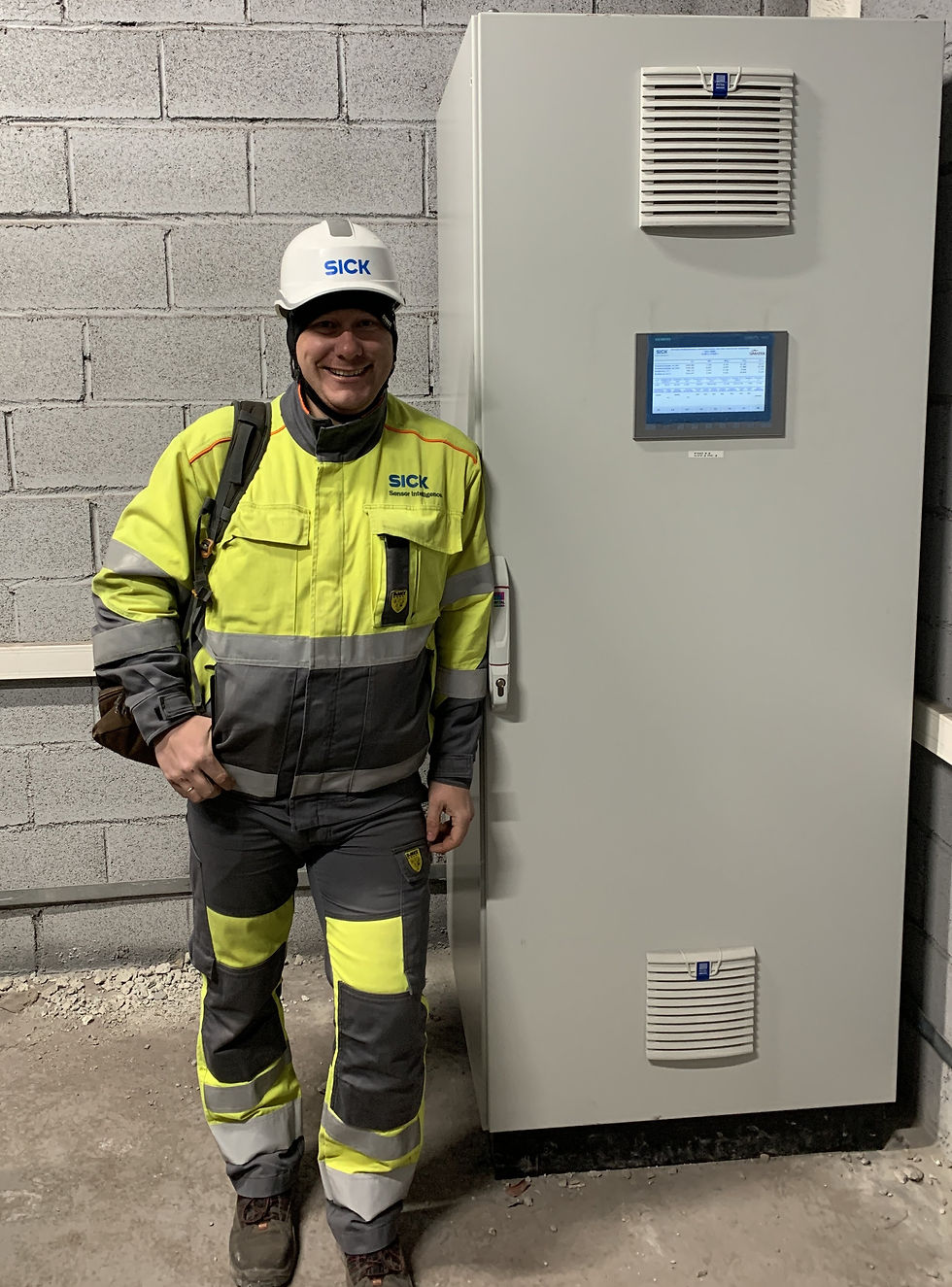
It was in this "hell" that the gas analyzer cabinets were installed. Not in a clean control room, not in a separate air-conditioned room, but directly in the workshop. Right next to sources of heat, dust, and toxic gas.
What Was Installed and Where
The following equipment was installed as part of the project:
"Hot" type extractive gas analyzers — the right choice in terms of measurement method.
Sampling probes — for capturing samples from the flue gas duct.
Ultrasonic flow meters and dust monitors — for monitoring volumetric flow rate and dust concentration.
Probe-type in-situ gas analyzers — this was the "fly in the ointment" mentioned earlier. Unlike cross-duct versions where the beam passes completely through the duct, probe-type in-situ instruments consist of a tube with optical elements at the end, which is inserted directly into the gas stream.
The installation points were chosen extremely poorly. All instruments in direct contact with the gas stream (extractive system probes, in-situ probes, flow meters, dust monitors) were inserted into the duct immediately after the exhausters (powerful extraction fans). The gas, which had undergone no preliminary cleaning, at tremendous speed and saturated with abrasive dust and scale particles, slammed into the sensitive elements of the instruments. The effect was comparable to sandblasting, except with red-hot metal dust instead of sand.
And the analyzer cabinets themselves, packed with expensive electronics, optics, and temperature control systems, were installed right there in the workshop, in an area with a temperature of +50 °C and a lethal concentration of CO.
Chronicle of Failure: Three Reasons for Inevitable Collapse
The system did not last long. Let's break down exactly what killed the equipment.
Reason No. 1: Thermal Death of Electronics
Any electronic device has an operating temperature range. For industrial gas analyzers, it is typically from +5 to +45 °C, sometimes up to +50 °C, but this is the extreme limit. At an ambient temperature of +50 °C and above, the cabinet's cooling system (even if present) operates at its limit. Built-in air conditioners or fans cannot cope. Overheating occurs in:
Radiation sources (lamps, lasers) — their lifespan drops drastically.
Detectors — noise levels increase, sensitivity decreases.
Electronic boards and drivers — malfunctions, false signals, and complete failure occur.
Under such conditions, even the most reliable electronics degrade at a catastrophic rate. Add to this the abrasive dust that clogs ventilation grilles and settles on circuit boards, impairing heat dissipation — and you have the perfect recipe for thermal collapse.
Reason No. 2: Abrasive Wear and Mechanical Destruction
This was the most dramatic aspect. The extractive system probes, installed immediately after the exhausters, took the brunt of the impact. The gas stream, saturated with solid particles, acted like a sandblaster. The coarse filters on the probes clogged almost instantly, and when attempts were made to clean or replace them, it was discovered that the metal of the probe itself had already been worn down. The thin walls of the sampling tubes were completely eroded through by the abrasive.
But the true "vulnerability champions" were the probe-type in-situ gas analyzers. Their design assumes that a measurement probe with optical windows or mirrors at the end is immersed directly into the gas stream. Under the conditions of a metallurgical workshop with abrasive dust, this probe was doomed. Imagine a metal tube being sandblasted around the clock: first, its protective coating is removed, then the metal itself thins and deforms, and the optical elements at the end turn into a frosted, opaque mess. The probes were literally "eaten" by the abrasive within a matter of weeks. Measurement was completely out of the question.
The ultrasonic flow meters met the same fate. Their sensors, mounted flush with the inner wall of the duct, were subjected to constant bombardment by particles. Fouling was only half the problem; the abrasive wear of the piezoelectric elements and the disruption of their geometry meant the instruments stopped providing any coherent signal. Dust monitors with optical windows were also "sandblasted" into a frosted state, through which light could no longer pass.


Reason No. 3: Maintenance Paralysis
Even if someone had wanted to quickly clean the optics or replace a failed sensor, doing so was practically impossible. The work area, with CO concentrations exceeding MAC limits, required a full set of protective measures: issuing a work permit for gas-hazardous operations, using isolating RPE (gas masks or breathing apparatus), having a standby observer present, and limiting the time spent in the hazardous zone.
Under such conditions, any operation, even the most minor, turned into a complex and lengthy procedure. And if serious repairs or component replacement were needed, working in the workshop was simply not an option. The only solution was the complete dismantling of the equipment and its relocation to a "clean" room for restoration. This led to prolonged monitoring system downtime and enormous repair costs.
What Should Have Been Done: The Correct Solution
The mistake was made not only in the choice of location but also, partially, in the choice of instrument type. For the system to operate reliably over the long term, several key conditions had to be met.
1. Relocate Analyzer Cabinets to a "Clean" Room. Gas analyzers, data acquisition systems, and controllers — all of this must be installed in a control room, laboratory, or a specially equipped container with air conditioning and air filtration. Sample delivery from the probe to the cabinet is performed via a heated line tens of meters long, which is absolutely standard practice. Adding an extra 20–30 meters of line length is nothing compared to losing all the equipment due to overheating and contamination.
2. Complete Rejection of Probe-Type In-Situ Instruments in Abrasive Wear Conditions. This is a lesson that was unfortunately ignored. Probe-type in-situ analyzers are suitable for relatively clean gas streams, but in the presence of metallurgical dust, they are doomed to rapid destruction. Only extractive systems with protected sampling probes and the capability for preliminary gas cleaning can survive in such an environment.
3. Relocate Sampling Points Further Away from Exhausters. Probes and flow sensors should not be placed immediately after fans in the zone of maximum turbulence and abrasive wear. A straight section of the duct further downstream must be selected, where the gas velocity stabilizes and the concentration of large abrasive particles decreases due to gravitational settling. This is a standard requirement in sampling system design.
4. Install Preliminary Gas Cleaning Systems. Even with the correct location choice, gas in metallurgical production always contains dust. To protect probes and flow meters from abrasive wear, preliminary cleaning devices must be incorporated — for example, cyclone separators or inertial dust collectors upstream of the probe inlet. This significantly extends the service life of all equipment.
Conclusions
This case is a vivid example that in industrial monitoring, choosing the right equipment is not enough. It must be placed correctly. You can buy the most accurate and reliable gas analyzer in the world, but if you put it in a furnace and cover it with sandpaper, it will turn into useless scrap within a few weeks.
Key lessons from this story:
Analyzer cabinets must always be placed in clean, air-conditioned rooms. Saving money by not laying an extra few meters of heated line will result in the loss of all equipment.
Probe-type in-situ instruments are categorically unsuitable for environments with high abrasive dust content. Under such conditions, their probes will be destroyed in the shortest possible time.
Sampling points must be located on straight sections of the duct, away from sources of turbulence, vibration, and maximum abrasive wear.
Under high dust load conditions, preliminary gas cleaning before the measuring instruments is mandatory.
Accessibility of equipment for maintenance under safe conditions is a critical factor. If cleaning optics requires donning a gas mask and risking one's life, the system is doomed to downtime and degradation.
Remember: an environmental monitoring system is not just a collection of instruments but a complex engineering system in which every detail — from the installation location to the temperature inside the cabinet — affects the final result. Neglecting these "minor details" always leads to the same outcome: the equipment fails, and the money invested in it goes up in smoke.


Comments